hello archive

Kiwi

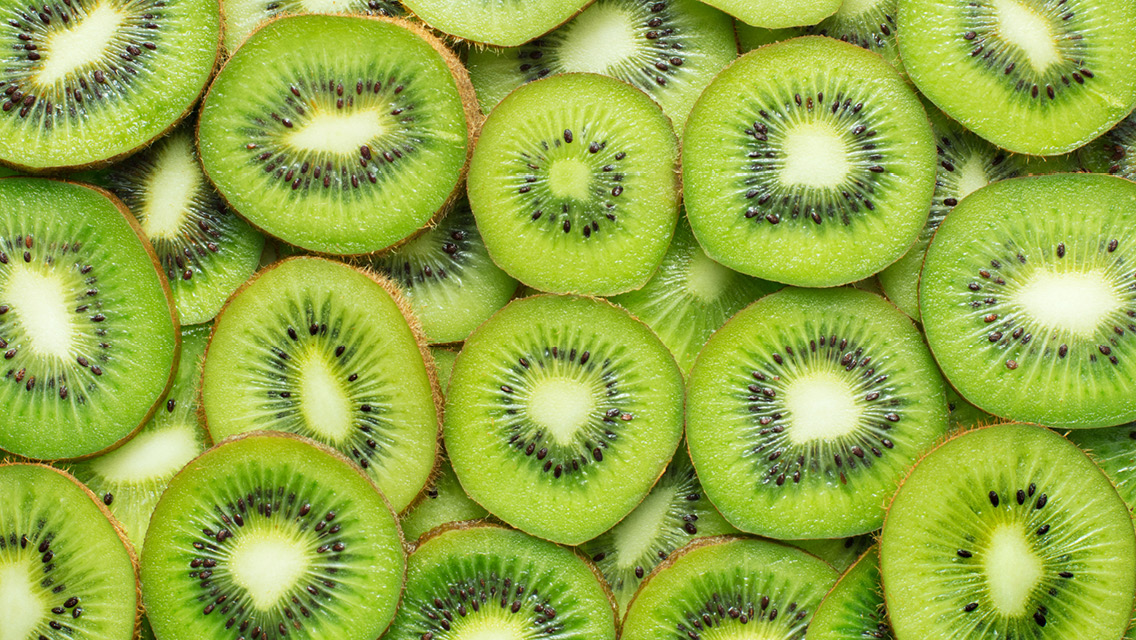
Kiwifruit is a relative newcomer to the American fruit salad. Previously known as the Chinese gooseberry, it was first shipped to the United States in the early 1960s from New Zealand. Soon after, crafty marketers renamed the fabulous fruit after New Zealand’s national bird, the kiwi. Until then, much of the world had been unaware of the fruit, even though it had been growing in China for more than 700 years. But how do you eat this fuzzy, nutrition-packed fruit? It’s easy: Just bite in!

Food Basics

Kiwifruit, often referred to simply as kiwi, has tart and sweet flesh with flavors reminiscent of strawberry, banana, melon, pineapple and citrus. Yet this versatile fruit has a unique appearance and a distinctive flavor like no other. About the size of a large egg, its light green or gold flesh is covered in a thin, fuzzy skin. The whole fruit is edible, including the skin, tiny poppylike seeds and cream-colored core. Kiwifruit is available year-round, with the bulk of its production coming from the United States (specifically, California), New Zealand and France, though Italy, Japan and Chile are large producers, too.

Nutritional Know-How

Kiwifruit is nutritionally dense. It’s low in sodium and calories and high in potassium. When ripe, the kiwi contains the proteolytic enzyme actinidin, which aids digestion. Ounce for ounce, kiwifruit contains more vitamin C (a water-soluble antioxidant) than an orange. It’s also a good source for two of the most important fat-soluble antioxidants: vitamin E and vitamin A. This combination of both water- and fat-soluble antioxidants has been shown to improve cardiovascular health. In fact, a 2004 University of Oslo study shows that daily consumption of two to three kiwifruit has similar effects as the daily dosage of aspirin some physicians recommend to improve heart health.

Kitchen Tricks

  • When buying kiwis, choose fruit free of bruises, soft spots, wrinkles and other signs of exterior damage.
  • For best flavor, allow kiwifruit to soften (like avocados or pears) before eating. It ripens best when placed near fruits that produce ethylene gas, such as apples, pears and peaches. That’s a good thing if you want to speed ripening – and a bad thing if you want to extend storage time.
  • Fully ripened kiwi can be kept for a week or more in the refrigerator. Hard kiwifruit can be stored in the refrigerator for up to two weeks, and then ripened at room temperature.
  • To peel a kiwi whole, simply use a vegetable peeler, slicing toward the hard end where the kiwi was attached to the vine.

Eat Up!

Kiwifruit can be prepared in many beautiful and delicious ways. As with all fruit, wash it before eating by rubbing it gently under cool water.

  • Eat a kiwi whole, like an apple, or slice it into quarters, like an orange, and enjoy – skin and all!
  • If you don’t like the skin, or if the fuzziness irritates your throat, cut the kiwifruit in half and use a small spoon to scoop out its tender flesh.
  • Slice kiwifruit over salads just before serving.
  • Kiwifruit complements most fruits and main dishes, but avoid mixing it with yogurt. The actinidin enzyme in kiwifruit dissolves milk proteins and gives the mixture an odd flavor.
  • The same actinidin enzyme, however, makes kiwifruit ideal for tenderizing and seasoning meats. Just rub meat with kiwi flesh or place kiwi slices on top of meat for 10 to 15 minutes. Remove slices and wipe off excess juice and pulp before cooking.
  • Peeled, sliced or diced, kiwifruit provides a tasty complement to cooked chicken and seafood dishes.
  • Purée kiwi and use as a dessert sauce, in cocktails or non-alcoholic slushes, or to make delicious sorbets and popsicles.

Spinach, Kiwi and Strawberry Salad with Honey Dijon Vinaigrette

Presented by Chef Neff, Conscious Cuisine®
Makes 8 cups

This tasty salad can be paired with almost anything. Try it with a grilled chicken breast, sautéed sea bass, baked tofu or tempeh.

  • 1 head of radicchio, cored, washed and leaves separated
  • 6 cups cleaned, trimmed and dried spinach, packed
  • 1 cup sliced 1/4-inch-thick strawberries
  • 1 cup peeled, medium-diced kiwi
  • 1 tbs. toasted sunflower seeds
  • 1 small red onion, thinly sliced
  • 1 tbs. rice vinegar
  • 2 tbs. honey
  • 2 tsp. Dijon mustard
  • 1/3 cup enoki mushrooms
  • Salt and pepper to taste

Directions

  1. Tear spinach into bite-size pieces and place in a salad bowl. Add strawberries, kiwi, sunflower seeds and onion.
  2. In a separate bowl, whisk together vinegar, honey, mustard, salt and pepper. Pour the dressing over the spinach mixture and toss lightly.
  3. Place one radicchio leaf on each plate. Arrange the spinach mixture in each radicchio cup. Garnish with enoki mushrooms.

Per Serving (1 cup):
Calories 60; Protein 2 g; Total Fat 1 g; Saturated Fat 0 g; Carbohydrates 12 g; Dietary Fiber 2 g; Cholesterol 0 mg; Sodium 125 mg|

Bulgur Wheat and Fruit Salad

Presented by Chef Neff, Conscious Cuisine®
Makes 4 1/2 cups

This quick, great-tasting salad pairs well with steamed asparagus and roast chicken, grilled vegetables and shrimp, or steamed halibut and spinach.

  • 2 cups steamed bulgur wheat
  • 1/2 cup dried cranberries
  • 1/2 cup dried blueberries
  • 1/2 cup dried cherries
  • 1 cup finely chopped red onion
  • 1/4 cup finely chopped parsley
  • A pinch of nutmeg
  • A pinch of allspice
  • 1/4 cup fruit-infused rice wine vinegar
  • 2 tsp. hazelnut or grape-seed oil
  • 1/2 tsp. sea salt
  • 1/4 tsp. freshly ground black pepper
  • 1 cup peeled, small-diced kiwi

Directions

  1. In a mixing bowl, combine the bulgur, dried fruit, onion and parsley.
  2. In a small bowl, whisk together the remaining ingredients, except the kiwi, and toss with the bulgur.
  3. Fold freshly diced kiwi into the bulgur.
  4. Chill the salad for at least 30 minutes before serving.

Per Serving (1/2 cup):
Calories 160; Protein 3 g; Total Fat 1.5 g; Saturated Fat 0 g; Carbohydrates 35 g; Dietary Fiber 5 g; Cholesterol 0 mg; Sodium 270 mg
Eggs

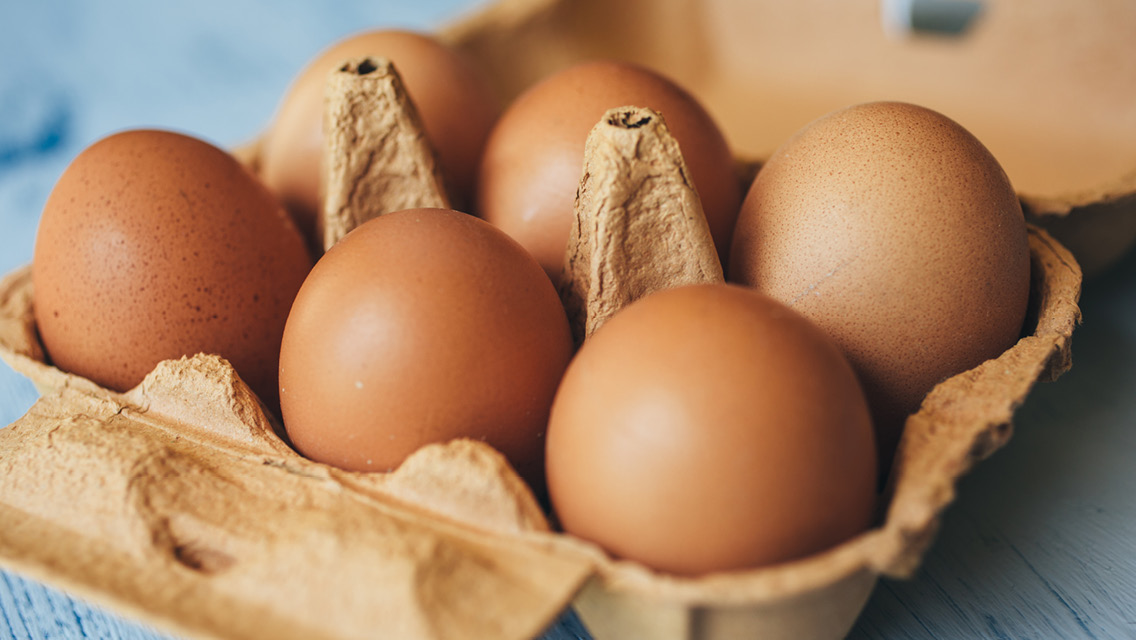
Long considered the foe of healthy hearts, eggs are winning back their reputation as one of nature’s most balanced and nutritious foods. These hard-working bundles of vitamins and minerals – which can have a starring role in a meal (think omelets and quiches) or be the essential bit player (the magic ingredient that gives soufflés their fluff) – are indispensable to cooks around the world for their versatility and flavor.

Food Basics

Brown, white, organic, free-range, omega-3 – you’ve got a lot of egg choices. When it comes to getting optimal nutrition and flavor, egg size and color don’t count – but the chickens’ diet and living conditions do.

Seek out eggs from birds raised under healthy and nutrition-minded conditions (not factory farms). You may note stronger shells; brighter, sturdier yolks; and clearer whites. And despite industry insistence to the contrary, you may also enjoy a better nutrient profile and better taste. Some folks prefer organic eggs, others prefer free-range. You can learn the difference and get a sense of the current egg (and meat) controversy in The Omnivore’s Dilemma by Michael Pollan. Chickens fed on flaxseed offer higher levels of omega-3 fatty acids, but you may pay a premium price for the extra nutrition.

Fresh, unbroken eggs can be kept in the carton for up to a month when properly refrigerated. Fresh eggs will sink in a bowl of cold water. If they bob near the surface, dump ’em.

Nutritional Know-How

Eggs got a bad reputation in the mid-20th century when cholesterol was first linked to heart disease. Today, though, the connection between dietary (food) cholesterol and blood (serum) cholesterol is far less certain, and current research suggests that the cholesterol in eggs is unlikely to play a significant role in contributing to heart disease in most people (ask your health professional). As a result, eggs are experiencing a popular resurgence.

Rich in protein, low in sodium, and loaded with essential vitamins and minerals (particularly B vitamins, folic acid and vitamin D), eggs are also high in healthy essential fatty acids. A single large egg contains 75 calories, 5 total grams of fat (1.6 saturated), 6 grams of protein and zero carbs.

Whole eggs provide an excellent balance of amino acids, and they pack the extra punch of lutein and zeaxanthin, two plant-based antioxidants. Keep in mind that the yolks are home to almost all of eggs’ vitamin A and iron, as well as their healthy fats and much of their flavor. Egg white is about 90 percent water and 10 percent protein with some trace minerals and vitamins.

Kitchen Tricks

  • Scrambled. In a medium-size bowl, beat eggs (plus a little salt and ground pepper) with a large fork or whisk until well mixed and fluffy. Heat a heavy-bottom pan over medium heat before adding a little olive oil or butter. When the oil begins to bubble, add eggs. Reduce heat to low and begin to stir occasionally as the eggs start to solidify. Eggs cooked slowly will stay moist and fluffy. They continue cooking when removed from heat, so to avoid rubberiness, remove when they are still slightly wet.
  • Boiled. Place whole eggs in a pot filled with cold water. Cook eggs over medium-high heat until boiling. As soon as the water comes to a boil, set the timer: For a soft-boiled egg, four to five minutes; medium-boiled, six to seven minutes; hard-boiled, 10 to 12 minutes. When time is up, remove eggs from the hot water and plunge them briefly under cold, running water. Immediately after cooking the eggs, and while they are still slightly warm, gently peel them under cold, running water. (Tip: Dip them briefly in ice water to prevent green yolks.) Place a colander in the sink to catch shell pieces. Hard-boiled eggs can be kept in the shell, refrigerated, for one week.
  • Poached. Fill a medium-size pot three-quarters full of cold water. Add 2 tablespoons of white vinegar to the water and bring to a boil. Reduce heat to a low simmer and swirl the vinegar and water with a spoon. Crack open and gently add eggs to the swirling water (one at a time). Cook for three to five minutes for soft- to medium-poached eggs.

Eat Up!

Chefs all over the world prize eggs for their versatility and flavor. They can be baked, boiled and even fermented. And their uses as a key ingredient in other dishes are innumerable. Here are some ideas for making superior eggs as a main dish:

  • Get creative when adding veggies and herbs to a scramble. Consider asparagus, sweet peppers, leeks, garlic, spinach, arugula, fresh or dried tomatoes, and wild mushrooms. Fresh basil adds a heady aroma and fresh flavor; crushed tarragon or thyme adds sophistication; curly parsley and ground paprika deliver visual appeal.
  • Eggs come alive with the right sauce – think garlic-chili, curry, marinara, even mustard. Want to add some spice but can’t tolerate Tabasco? Try a natural, local or homemade mild salsa, perhaps with a little plain yogurt on the side.
  • Serve your salsa and eggs with a tortilla, beans and green chilies for a simple brunch of Huevos Rancheros. Or whip up a vegetable and smoked-trout frittata for a delightful dinner. Try this Arugula and Mushroom Frittata With Chèvre or a Pizza Margherita Frittata.

Miraval Omelet

Makes one omelet

  • 1/4 tsp. extra-virgin olive oil
  • 1/4 cup diced fresh shiitake mushrooms
  • 1 tbs. finely chopped green onion
  • 1/4 cup diced fresh tomato
  • 1/4 cup packed fresh spinach
  • 1 tbs. low-fat cream cheese
  • 1 whole egg, plus two egg whites, lightly whipped
  • 1/8 tsp. sea salt
  • 1/8 tsp. freshly ground black pepper

Directions

  1. Preheat the broiler.
  2. Heat a sauté pan with a flameproof handle over medium heat and add the olive oil. Add the vegetables and sauté until they begin to soften, about five minutes.
  3. Pour the egg whites over the vegetables and season with salt and pepper.
  4. Cook until the bottom is done and the sides are firm, about four minutes.
  5. Spread the cream cheese on top of the omelet.
  6. Place the pan under the broiler for about two minutes to finish cooking the top of the omelet. Remove from heat. Fold over half of the omelet and serve.

Vegetable Quiche With Rice Crust

Serves 8

Crust:

  • 2 cups cooked brown rice
  • 2 large egg whites
  • 1 tbs. finely chopped fresh parsley
  • 1 tsp. finely chopped fresh oregano
  • 1/4 tsp. sea salt
  • 1/8 tsp. freshly ground black pepper

Filling:

  • 1/2 tsp. extra-virgin olive oil
  • 1/2 cup finely diced red bell pepper
  • 1/2 cup finely diced mushroom
  • 1/4 cup finely chopped red onion
  • 1 cup chopped, packed fresh spinach
  • 2 large egg whites
  • 2 large eggs
  • 3/4 cup fat-free milk
  • 1/8 tsp. sea salt
  • 1/8 tsp. freshly ground black pepper
  • Pinch of nutmeg
  • 1/4 cup freshly grated Parmesan cheese

Directions

  • Preheat the oven to 350 degrees F.
  • For the crust: In a mixing bowl, combine the rice, egg whites, parsley, oregano, salt and pepper. Coat an 8-inch pie pan with cooking spray. Press the rice mixture over the bottom and up the sides of the pie pan to form a crust. Bake for 15 minutes or until the crust is set and lightly browned.
  • For the filling: Heat a sauté pan over medium heat and add the olive oil to lightly coat the bottom of the pan. Add the bell pepper, mushroom, onion and spinach; sauté until the onion softens, about five minutes. Remove from heat and set aside.
  • To assemble: Place the pie pan with prepared crust on a baking sheet. Spread the vegetables over the bottom of the crust and pour the egg mixture over them.
  • Bake for 55 minutes or until the eggs have set. Cut into eight wedges to serve.

Recipes excerpted from Conscious Cuisine by Chef Cary Neff (Sourcebooks, 2002).